I–X
CONVERSA VI | Rosa | 04–04–2012
Catarina Laranjeiro & Catarina Vasconcelos
Culturas visuais
Visual culture
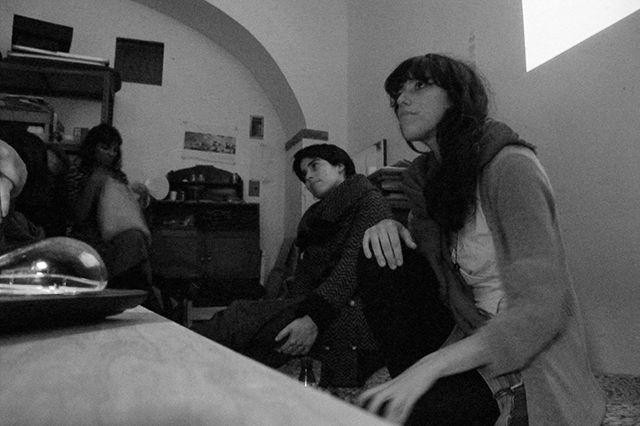
A Catarina L. vem das Ciências Humanas, andou a brincar ao vídeo no ARCO, esteve na Guiné-Bissau a trabalhar, passou por Berlim, cidade a que voltará agora. A Catarina V. veio da Faculdade de Belas Artes e de uma grande confusão artística, de uma mãe socióloga e de um pai economista. Encontraram-se no ISCTE. Um feliz casamento, sem dúvida!
Catarina L. comes from the field of Humanities, she played around with video at ARCO, she has been in Guinea-Bissau where she worked for a year. She has also been in Berlin, where she’ll be returning to soon. Catarina V. comes from the Faculty of Fine Arts and from a big artistic confusion, from a family in which the mother is a sociologist and the father an economist. They met at ISCTE. A happy marriage, no doubt.
Conversa
O filme que apresentado resulta de uma investigação sobre as memórias do bairro da Mouraria na cidade de Lisboa, tendo o seu foco no Grupo Desportivo da Mouraria. Partindo da ideia de micro-história de Ginzburg (1989) propuseram-se a analisar os rituais e atividades promovidos na Mouraria, pelo grupo desportivo, através das memórias das pessoas que os desempenham e suportam. Pressupondo que as fotografias têm uma contribuição inigualável na manutenção das nossas memórias, procuraram que estas as guiassem na recolha da história de vida de cada um dos entrevistados, através da técnica de photo-elicitation. As histórias e fotografias recolhidas cruzam-se entre si, compondo a história da Mouraria, da sua marcha e dos seus fadistas.
Their short film is the result of a research about the memories of a group of residents of Mouraria, a neighborhood in the centre of Lisbon. The research was conducted with members of the “Grupo Desportivo da Mouraria”. Based on Ginzburg’s concept of “microhistory”, they analyzed the rituals and activities promoted by the association, following the memories of the people who realized them and supported them. Assuming that images make a unique contribution to the maintenance of our memories, they chose to let themselves to be guided by photographs during the collection of the life histories and of all of the interviewees, by way of photo-elicitation. The resident’s stories and their photographs intermingle with each other, creating together the history of Mouraria, its marches and its fado singers.
João Catarino
Ilustração
Illustration

O João Catarino nasceu em 65 em Lisboa, frequentou a Escola António Arroio e fez a licenciatura em Design de Comunicação na Faculdade de Belas Artes de Lisboa. É professor de Desenho e Design no ARCO e de Ilustração nos cursos do CIEAM da FBAUL. Tem publicado ilustrações em diversos jornais, revistas e canais de televisão.
João Catarino was born in 1965 in Lisbon, and studied at the António Arroio high school and Communication Design at the Fine Arts University in Lisbon. He teaches Drawing and Design at ARCO and Illustration at the CIEAM courses at the Fine Arts University in Lisbon. He has been publishing illustrations in several magazines, newspapers and television stations.
Conversa
O João Catarino contou a experiência de uma viagem de norte a sul da costa portuguesa numa carrinha “pão de forma” com o seu amigo escritor Pedro Adão e Silva e um cão. A viagem foi documentada através de desenhos e textos que foram publicados na revista Única do jornal Expresso no Verão de 2011.
João Catarino shared the experience of a trip from the north to the south of the Portuguese coast in a camper van with his friend and writer Pedro Adão e Silva and a dog. The journey was documented with drawings and texts and it was published at the Única magazine of the Portuguese newspaper Expresso in the 2011 Summer.
Lourenço Egreja
Curadoria
Curating
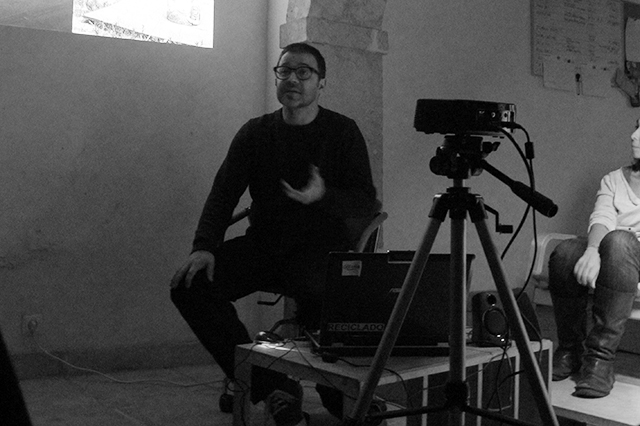
É curador independente de vários projetos como o Carpe Diem Arte Pesquisa e a Associação Abraço. Nos EUA trabalhou com a Creative Time, Wave Hill, Roy Lichtenstein Foundation. Em Portugal desenvolveu e coordenou vários projetos como o Anteciparte, nas edições de 2005, 2006, 2007 e 2008; Smallbox28 no Hospital Júlio de Matos; As Sete Maravilhas EDP; Junho das Artes em Óbidos. É Mestre em História de Arte e Estudos Museológicos pela City University of New York, Nova Iorque, EUA.
Independent curator of projects such as Carpe Diem Arte e Pesquisa, Associação Abraço, and Projeto Correspondência. In the United States of America, after the conclusion of the MA in History of Art, worked for Creative Time, Wave Hill, The Roy Lichstenstein Foundation. In Portugal developed and coordinated projects Anteciparte, in the editions of 2005, 2006, 2007 e 2008; Smallbox28 at Hospital Júlio de Matos; As Sete Maravilhas EDP; Junho das Artes in Óbidos.
Conversa
O Carpe Diem Arte e Pesquisa é um projeto de residências artísticas no âmbito das artes plásticas sediado no Palácio Marquês de Pombal em Lisboa. Os artistas desenvolvem projetos a partir do palácio e a partir dos diálogos com o curador e a sua equipa. Paralelamente, o projeto desenvolveu a sua sustentabilidade através do projeto Múltiplos e o projeto de itinerâncias das exposições realizadas.
Carpe Diem Arte e Pesquisa is a fine arts residency project based in the Palácio Pombal in Lisbon, Portugal. Artists are invited to develop work from the dialogues with the XVII century palace and the curatorial team. At the same time the project has developed a sustainable drive with the Multiples created from the artists’ projects and the itinerant exhibitions.