XXI–XXX
CONVERSA XXVIII | Rosa | 07–11–2012
Diogo Simões
Diário - Miratejo
Miratejo - Diary
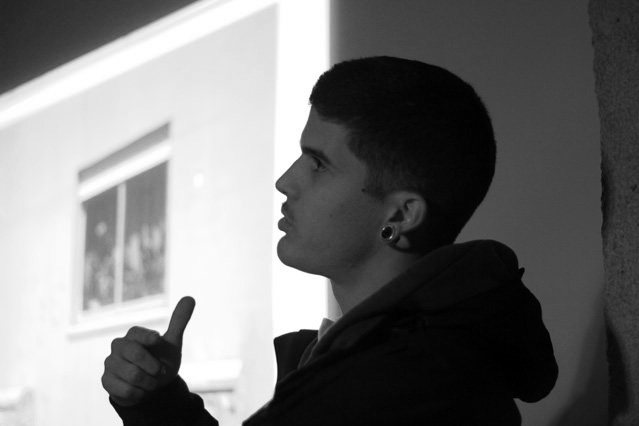
“A questão da identidade, da comunidade e o sentimento de pertença são abordados na obra de Diogo Simões (n. 1988, Miratejo) mediante um exercício fotográfico de registo diário de um conjunto de amigos pertencentes ao seu círculo. Nascido em Miratejo, Diogo Simões tem mantido através da sua obra artística uma forte ligação ao seu contexto envolvente, ao espaço, às pessoas, à história, ao sítio em que vive.” Sandra Vieira Jürgens
“The matter of identity, of community and the feeling of belonging are approached in the work of Diogo Simões (born in 1988, in Miratejo) through the daily exercise of registering, photographically, a group of friends within his circle. Born in Miratejo, Diogo Simões has kept, throughout his work, a strong connection to his environment; to the land, the people, the history, to the place he lives in.”Sandra Vieira Jurgens
Conversa
O projeto Diário – Miratejo utiliza como meio de expressão a fotografia e tem vindo a ser desenvolvido desde 2010 no bairro de Miratejo, Seixal. O autor tem fotografado, ao longo destes dois anos, o seu grupo de amigos e o meio/espaço envolvente. As fotografias testemunham, acima de tudo, uma relação que também é sua e onde se reflete.
The project Miratejo - Diary uses photography as medium and has been developed since 2010 at the Miratejo neighborhood, in Seixal. The author has photographed, throughout these two years his group of friends and the immediate surroundings. The photographs show a relationship that is also his and in which he is reflected.
Filipa Nunes
Da pele ao cérebro, quem és?
From your skin to your brain, who are you?

Filipa Nunes encara-nos como seres inteiros onde o que é psíquico, motor, intelectual, social, afetivo, linguístico e energético interage constantemente. Para compreender a complexidade dessa interação tem percorrido um caminho contínuo passando pela Psicomotricidade, pelas Terapias Orientais e pela Dança.
Filipa Nunes looks at us as whole beings, where the psychic, the motor, the intelectual, social, affective, linguistic and the energetic constantly interact. To understand the complexity of that interaction, she has led a continuous path through Psychomotricity, Oriental Therapies and Dance.
Conversa
A Psicomotricidade é uma ciência terapêutica que explica a importância da experiência corporal no desenvolvimento motor, intelectual, psíquico, social, afetivo, bem como na construção da Identidade e Autoconfiança. A interação é bidirecional, influenciando o modo como sentimos e interagimos com o corpo. Depois de explicadas estas ligações, foi concretizada uma atividade entre todos, exemplificando-se o que é a terapia.
Psychomotricity is a therapeutical science that explains the importance of body experience in the motor, intellectual, psychic, social and emotional development, as well as in building one’s identity and self confidence. The interaction is bi-directional, influencing the way in which we feel and interact with the body. After explaining these connections, an activity was held with all present exemplifying what the therapy is.
Tiago Patrício
Escrita, leitura, instalação
Writing, reading, installation
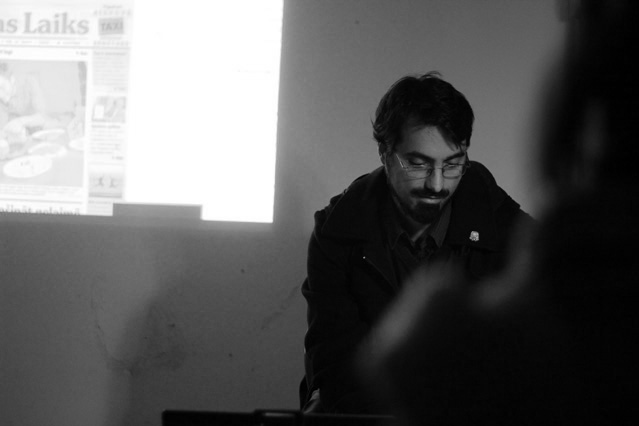
Tiago Patrício nasceu no Funchal em 1979, mas cresceu em Trás-os-Montes, passou pela Escola Naval e acabou Farmacêutico. Na semana em que o seu romance "Trás-os-Montes" venceu o Prémio Agustina Bessa-Luís, a farmácia onde trabalhava foi vendida. Agora a escrita a tempo inteiro será uma oportunidade ou uma obrigação?
Tiago Patrício was born in Funchal, in 1979, but he grew up in Trás-os-Montes. He attended the Navy School and ended up being a pharmaceutist. On the week his novel, “Trás-os-Montes” won the Agustina Bessa Luís Prize, the pharmacy he worked for was sold. Now, is full time writing, an opportunity or an obligation?
Conversa
Na Conversa, falou-se de uma aproximação da Literatura às Artes Visuais e Sonoras, através de parcerias com outros artistas, de forma a produzir textos como instalações que possam ser lidos ao longe ou escutados para lá das barreiras de idioma. Estes textos aparecem em forma de poesia desenhada em janelas de “casas bilingues”, dobrados em embalagens de chá com “poemas medicinais” ou em faixas áudio como “Rádio-Poesia”.
At this Conversa, we talked about bringing Literature closer to the Visual and Audio Arts, through partnerships with other artists so as to produce texts as installations that can be read from afar or heard beyond idiomatic barriers. These texts appear in the form of poems, drawn in windows of “bilingual houses”, dubbed in tea packs with “medicinal poems” our in audio tracks as “Radio Poetry”.